The Rise of AI-Powered Haircut Generators: A Technological Leap in Personal Styling
The beauty industry is undergoing a significant transformation, driven by the rapid advancements in artificial intelligence (AI). One area witnessing this disruption is hair styling, with the emergence of AI-powered haircut generators. These innovative tools are leveraging the power of deep learning and computer vision to revolutionize how we choose and visualize hairstyles, offering a personalized and engaging experience unlike anything seen before. This article delves deep into the technology behind AI haircut generators, explores their capabilities, limitations, and potential future impact on the beauty industry and beyond.
Understanding the Technology Behind AI Haircut Generators:
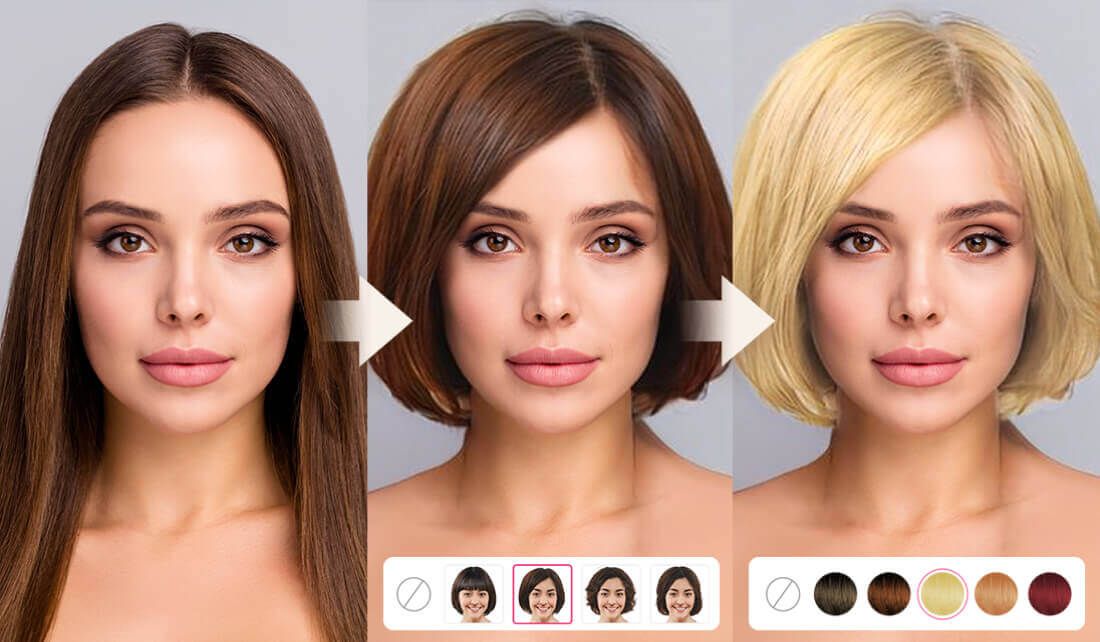
AI haircut generators utilize a complex interplay of different AI technologies to achieve their impressive results. At the core lies deep learning, a subset of machine learning that allows computers to learn from vast amounts of data without explicit programming. These models are trained on massive datasets of images and videos of various hairstyles, encompassing different hair types, lengths, textures, and facial features.
The training process involves feeding the AI algorithm thousands, even millions, of images, each meticulously labeled with details about the hairstyle: length, style (e.g., bob, pixie, layered), texture (straight, wavy, curly), and even the color. The algorithm then identifies patterns and relationships between these features and the resulting visual appearance. This process enables the AI to learn the intricate nuances of hair styling and develop a sophisticated understanding of how different elements interact to create a specific look.
Convolutional Neural Networks (CNNs), a specialized type of deep learning architecture, play a crucial role in image processing and analysis. CNNs are exceptionally effective at identifying and extracting features from images, allowing the AI to analyze the user’s facial features, hair texture, and existing hairstyle to suggest suitable options. This analysis informs the generation of realistic simulations of how different haircuts would look on the individual.
Generative Adversarial Networks (GANs) are another key technology used in many AI haircut generators. GANs consist of two neural networks: a generator and a discriminator. The generator creates new images of hairstyles based on the input data and the learned patterns, while the discriminator evaluates the realism and quality of these generated images. This adversarial process refines the generator’s output, leading to increasingly realistic and accurate simulations.
Capabilities and Features of AI Haircut Generators:
Modern AI haircut generators offer a range of impressive capabilities, transforming the way individuals approach hair styling decisions. These features include:
-
Personalized Recommendations: Based on the user’s facial features, hair type, and existing hairstyle, the AI provides tailored recommendations, ensuring the suggested haircuts are suitable and flattering. This eliminates the guesswork often involved in choosing a new hairstyle.
-
Real-time Visualization: Users can upload a photo of themselves and virtually "try on" different hairstyles in real-time. This allows for immediate visual feedback, enabling users to experiment with various options before making a commitment.
-
Style Exploration: The generators offer a wide range of hairstyles to explore, from classic cuts to trendy styles, providing users with ample choices to find their perfect match. Filters and search options further refine the selection process, allowing users to focus on specific styles or features.
-
Hair Color and Texture Modification: Many AI haircut generators allow users to experiment with different hair colors and textures, providing a comprehensive view of how various combinations might look. This allows for a holistic approach to style exploration.
-
Integration with Styling Tools: Some advanced generators integrate with other beauty tools, such as virtual makeup applications, providing a complete virtual makeover experience. This holistic approach simplifies the process of planning a new look.
-
User-Friendly Interface: Most AI haircut generators boast intuitive and user-friendly interfaces, making them accessible to users with varying levels of technical expertise. This accessibility is crucial for widespread adoption.

Limitations and Challenges:
Despite the impressive capabilities of AI haircut generators, several limitations and challenges remain:
-
Data Bias: The accuracy and effectiveness of AI models depend heavily on the quality and diversity of the training data. If the training data is biased towards certain hair types, ethnicities, or styles, the generated results may not be representative of all users. Addressing this bias is crucial for creating truly inclusive tools.
-
Accuracy of Simulations: While AI generators strive for realism, the simulations may not always perfectly capture the nuances of real-world hair. Factors like hair density, shine, and individual hair characteristics can be difficult to accurately represent.
-
Hardware Requirements: The processing power required to run sophisticated AI models can be demanding, potentially limiting accessibility for users with older or less powerful devices.
-
Privacy Concerns: Users uploading photos of themselves need to be assured of the security and privacy of their data. Robust security measures are essential to build trust and encourage adoption.
-
Ethical Considerations: The potential for AI to perpetuate unrealistic beauty standards or promote body image issues needs careful consideration. Developers must prioritize ethical development and responsible use of the technology.
Future Implications and Potential Applications:
The future of AI haircut generators looks promising, with potential applications extending far beyond personal styling:
-
Enhanced Customer Experience in Salons: Salons can utilize AI generators to help clients visualize different hairstyles, leading to improved communication and reduced misunderstandings.
-
Training and Education for Hair Stylists: AI can serve as a valuable tool for training and education, allowing aspiring stylists to practice and refine their skills in a virtual environment.
-
Product Development and Marketing: AI can assist in the development and marketing of new hair products and styling tools, by analyzing trends and preferences.
-
Accessibility for People with Disabilities: AI generators can improve accessibility for individuals with visual or mobility impairments, allowing them to explore and choose hairstyles independently.
-
Integration with Augmented Reality (AR) and Virtual Reality (VR): Future developments could see AI haircut generators integrated with AR and VR technologies, offering even more immersive and interactive experiences.
Conclusion:
AI-powered haircut generators represent a significant advancement in personal styling, offering users a personalized and engaging way to explore and visualize different hairstyles. While limitations and challenges remain, the potential benefits are substantial, promising to transform the beauty industry and improve the overall customer experience. As AI technology continues to evolve, we can expect even more sophisticated and accurate AI haircut generators, further blurring the lines between the virtual and real worlds of hair styling. The key to realizing the full potential of this technology lies in addressing the ethical considerations and ensuring equitable access for all users, regardless of their hair type, ethnicity, or technical expertise. The journey of AI in the beauty industry is only just beginning, and the future looks incredibly exciting.


