The Ultimate Guide to Men’s Haircuts Based on Face Shape
Choosing the right haircut can significantly impact your overall appearance. A well-chosen style can accentuate your best features, while a poorly chosen one can detract from them. Understanding your face shape is the crucial first step in finding the perfect haircut. This comprehensive guide will delve into the different face shapes for men and offer tailored haircut suggestions to help you achieve your desired look.
Identifying Your Face Shape:
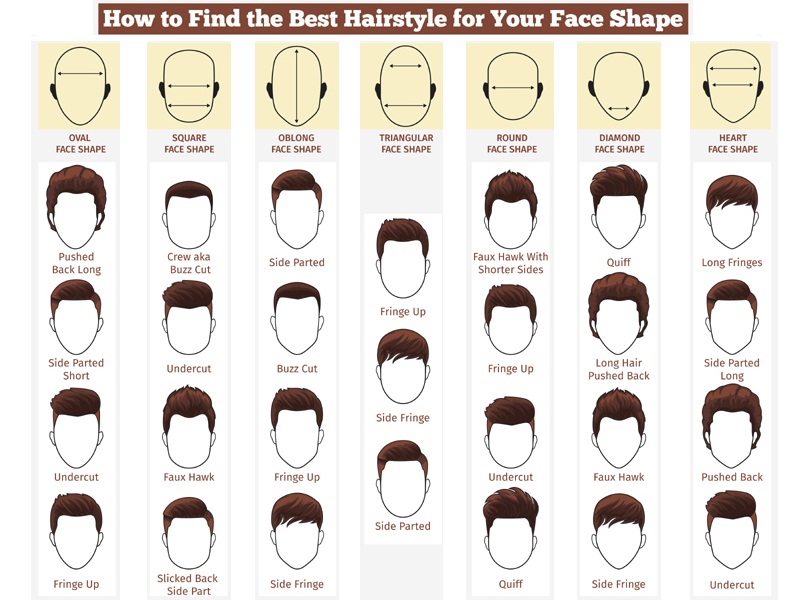
Before we dive into haircut recommendations, let’s learn how to determine your face shape. The most common face shapes for men are:
-
Oval: This is considered the ideal face shape, characterized by a balanced length and width. The forehead is slightly wider than the jawline, which tapers gently.
-
Round: A round face has a similar width and length, with soft, rounded features. The cheeks are usually full, and the jawline is not sharply defined.
-
Square: A square face is characterized by a strong, angular jawline that is roughly the same width as the forehead. The sides of the face are straight, creating a boxy appearance.
-
Rectangle (Oblong): A rectangular face is longer than it is wide, with a prominent forehead and a strong jawline. The length is significantly greater than the width.
-
Triangle (Pear): A triangular face has a wider jawline than forehead, tapering upwards. The chin is typically prominent.
-
Inverted Triangle (Heart): An inverted triangle face has a wider forehead than jawline, with a pointed chin.
-
Diamond: A diamond face is characterized by a narrow forehead and chin, with the widest point at the cheekbones.
Hairstyles for Each Face Shape:
Now that you’ve identified your face shape, let’s explore suitable hairstyles:
1. Oval Face Shape:
Men with oval faces are fortunate as most hairstyles suit them. However, the goal is to maintain the balance and avoid hairstyles that drastically alter the proportions.
-
Recommended Styles: Side parts, textured crops, quiffs, pompadours, long hair with layers, and even buzz cuts can all work well. Experiment with different lengths and styles to find what you like best. Avoid styles that are too heavy on top, as this can make the face appear shorter.
-
Styles to Avoid: Extremely long hair that overwhelms the face, or styles that are too short and expose too much of the forehead.
2. Round Face Shape:
The goal with a round face is to create the illusion of length and angles. Adding height on top and keeping the sides shorter helps to achieve this.
-
Recommended Styles: Hairstyles with height on top, such as a quiff, pompadour, or textured crop with a high fade or undercut. Side parts can also work well, especially if they are styled with some volume. Avoid styles that are too short and round.
-
Styles to Avoid: Short, rounded styles that accentuate the roundness of the face. Long, straight hair that hangs past the jawline can also make the face appear wider.
3. Square Face Shape:
Square faces benefit from hairstyles that soften the strong jawline and add some softness to the overall look.
-
Recommended Styles: Long layers, side swept bangs, or textured styles that add volume on top. Avoid styles that are too short and boxy, which will accentuate the angular features. Slightly longer hair on top can help to balance the strong jawline.
-
Styles to Avoid: Short, boxy cuts that emphasize the square shape. Avoid harsh lines and sharp angles.
4. Rectangle (Oblong) Face Shape:
The aim with a rectangular face is to create the illusion of width and shorten the length.
-
Recommended Styles: Styles with volume on the sides to broaden the face. Sideburns, full beards, or side swept bangs can also help to add width. Avoid styles that are too tall or sleek. A well-placed beard can significantly improve the proportions.
-
Styles to Avoid: Long, straight hair that emphasizes the length of the face. Tall, narrow styles will make the face appear even longer.
5. Triangle (Pear) Face Shape:
The goal for a triangular face is to balance the wider jawline with the narrower forehead.
-
Recommended Styles: Hairstyles that add volume and width at the top of the head, such as a quiff or pompadour. A side part can also help to draw attention away from the jawline. Avoid styles that are too short on top and heavy on the bottom.
-
Styles to Avoid: Short, close-cropped styles that emphasize the wider jawline. Avoid styles that are too heavy on the bottom.
6. Inverted Triangle (Heart) Face Shape:
The aim with an inverted triangle face is to draw attention away from the wide forehead and towards the chin.
-
Recommended Styles: Styles that add volume at the bottom of the face, such as a short beard or sideburns. Layers and textured styles can help to soften the wide forehead. Avoid styles that are too short on the sides and too voluminous on top.
-
Styles to Avoid: Styles with excessive volume on top, which will emphasize the wide forehead. Avoid bangs that cover the forehead completely.
7. Diamond Face Shape:
The goal with a diamond face is to add volume to the forehead and chin to balance the prominent cheekbones.
-
Recommended Styles: Styles with volume at the top and bottom of the face. A well-groomed beard or sideburns can help to balance the proportions. Avoid styles that are too flat on top or too short on the sides. A medium-length style can work particularly well.
-
Styles to Avoid: Very short, tight styles that emphasize the cheekbones. Avoid styles that are too sleek and flat.
Beyond Face Shape:
While face shape is a crucial factor, other elements also influence haircut choice:
-
Hair Texture: Fine hair requires different styling techniques than thick, coarse hair.
-
Hair Density: Thinning hair needs a style that adds volume, while thick hair can handle more intricate cuts.
-
Lifestyle: Consider your daily routine and how much time you’re willing to spend styling your hair.
-
Personal Style: Ultimately, your haircut should reflect your personality and preferences.
Conclusion:
Choosing the right haircut involves understanding your face shape and considering other factors like hair texture, density, and lifestyle. This guide provides a starting point; experimentation and consultation with a skilled barber or stylist are essential to finding the perfect cut that enhances your features and boosts your confidence. Remember, the best haircut is one that makes you feel good! Don’t be afraid to try new things and find what works best for you.


