Islamically Acceptable Haircuts for Men: A Comprehensive Guide
The question of appropriate hairstyles for Muslim men often arises, particularly concerning the interpretation of Islamic teachings on grooming and appearance. While the Quran and Sunnah (prophetic traditions) don’t explicitly detail specific haircut regulations, several principles guide Muslim men in choosing hairstyles that are both aesthetically pleasing and religiously compliant. This comprehensive guide explores these principles, examines various haircut styles, and provides insights into the cultural and religious contexts surrounding men’s hairstyles in Islam.
Islamic Principles Guiding Hair Choices:
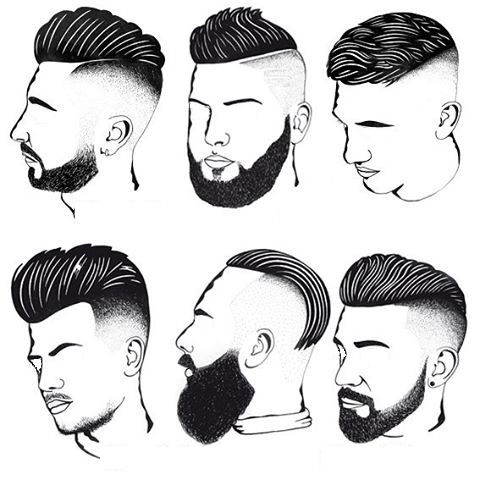
The core principles guiding Islamically acceptable haircuts for men revolve around cleanliness, modesty, and avoiding imitation of non-Muslim cultures, particularly those deemed extravagant or ostentatious. These principles are not explicitly stated as rules but are derived from broader Islamic teachings on personal hygiene, social decorum, and avoiding extravagance.
-
Cleanliness (Taharah): Islam emphasizes personal hygiene, and maintaining a clean and well-groomed appearance is considered a sign of respect for oneself and for God. This includes keeping the hair clean and neatly trimmed, avoiding excessive matting or unkemptness. A clean haircut is an integral part of this principle.
-
Modesty (Hiya): Modesty in Islam extends to all aspects of life, including personal appearance. While there’s no specific length restriction for hair, extreme styles that draw undue attention or are considered provocative are generally discouraged. The emphasis is on maintaining a balanced and respectable appearance.
-
Avoiding Extravagance (Israf): Islam discourages extravagance and excessive spending on superficial matters. This principle can be applied to hairstyles, suggesting that excessively elaborate or time-consuming styles that require significant financial investment might be considered undesirable.
-
Following the Sunnah: While there’s no explicit prohibition on specific haircuts, many Muslim men strive to emulate the Prophet Muhammad’s (peace be upon him) practices. While his exact hairstyle isn’t definitively documented in detail, the general principle of maintaining a neat and modest appearance provides guidance. Many interpret this as favoring simple, practical styles over overly complex or flamboyant ones.

-
Cultural Context: It’s crucial to acknowledge the diversity of Islamic cultures. What might be considered a modest and acceptable hairstyle in one culture might be viewed differently in another. Cultural sensitivities and local customs play a significant role in shaping personal choices regarding hairstyles.
Popular and Islamically Acceptable Haircuts:
Numerous haircuts are compatible with Islamic principles, prioritizing neatness, modesty, and avoiding extremes. Here are some examples:
-
The Short Back and Sides (SBS): This classic style involves short hair on the sides and back, with the top hair left slightly longer, allowing for various styling options. It’s a clean, versatile cut that remains popular globally and easily adheres to Islamic principles of modesty and cleanliness.
-
The Crew Cut: A very short, uniform haircut all over the head, the crew cut is practical, easy to maintain, and consistently maintains a neat and tidy look. It aligns perfectly with the Islamic emphasis on cleanliness and simplicity.
-
The Fade: Fades, which gradually transition from short hair at the sides and back to longer hair on top, offer a modern and stylish option. Variations exist, from low fades to high fades, allowing for personalization while maintaining a neat and respectable appearance. The key is to avoid excessively high or dramatic fades that might be considered ostentatious.
-
The Buzz Cut: This extremely short haircut is very easy to maintain and keeps the hair neat and clean. It’s a practical and modest choice.
-
The Undercut: The undercut features short hair on the sides and longer hair on top, offering versatility in styling. As with other styles, the key is to maintain a balanced and modest overall look, avoiding extremes in length or styling.
-
Longer Hairstyles with Neat Styling: Longer hair is not inherently forbidden in Islam, but it requires meticulous care and neat styling to avoid appearing unkempt or drawing undue attention. Long hair should be kept clean, well-maintained, and styled in a way that doesn’t violate the principles of modesty and avoid extravagance. This often involves tying the hair back or using other methods to keep it out of the face and neatly contained.
Haircuts to Generally Avoid:
While the focus should be on maintaining a neat and modest appearance, certain hairstyles might be considered inappropriate due to their association with extravagance, imitation of non-Muslim cultures, or potential for drawing excessive attention:
-
Extremely Long Hair: While not explicitly forbidden, extremely long hair might be considered impractical and potentially unhygienic, depending on the individual’s ability to maintain its cleanliness.
-
Elaborate and Extravagant Styles: Hairstyles requiring excessive time, effort, or financial investment for maintenance might be considered contrary to the principle of avoiding extravagance. This could include styles that involve extensive use of styling products, complex braiding, or other elaborate techniques.
-
Styles Imitating Non-Muslim Cultures: While it’s not wrong to adopt styles that are not uniquely Muslim, it’s important to avoid hairstyles that are explicitly associated with non-Muslim cultures and might be considered an attempt to emulate or imitate them. The emphasis should be on maintaining a personal style that aligns with Islamic principles.
-
Hairstyles that are deemed provocative or indecent: This is a subjective area, and it’s crucial to consider the local cultural norms and sensitivities. Hairstyles that might be deemed provocative or indecent in one context might be acceptable in another.
Conclusion:
Choosing an Islamically acceptable haircut is ultimately a matter of personal responsibility and conscience. The guiding principles of cleanliness, modesty, and avoiding extravagance should inform the decision-making process. The diversity of Islamic cultures further underscores the importance of considering local customs and sensitivities. While there’s no single "correct" hairstyle, the emphasis should always be on maintaining a neat, respectful, and modest appearance that aligns with Islamic teachings and personal values. Ultimately, the most important aspect is sincerity in one’s intentions and commitment to upholding Islamic principles in all aspects of life, including personal grooming. Consulting with religious scholars or community leaders can also provide valuable guidance and clarification in specific cases. The goal is not to adhere rigidly to arbitrary rules but to embody the spirit of Islamic teachings through responsible and thoughtful choices in personal appearance.


