DIY Haircuts for Women: A Comprehensive Guide to Trimming, Shaping, and Styling at Home
For many women, the prospect of a DIY haircut evokes images of disastrous results and emergency salon visits. However, with the right tools, techniques, and a healthy dose of patience, achieving a successful at-home haircut is entirely achievable. This comprehensive guide will walk you through various DIY haircut techniques, offering tips and tricks to help you confidently tackle your next trim or style change. Remember, while professional results may require a stylist’s expertise, mastering these techniques can help you maintain your current style, experiment with subtle changes, or even achieve a completely new look.
Part 1: Assessing Your Hair and Choosing the Right Tools

Before you even pick up a pair of scissors, a thorough assessment of your hair type, texture, and current style is crucial. Understanding your hair’s characteristics will inform your choice of tools and techniques, leading to a more successful outcome.
Hair Type and Texture:
- Fine Hair: Fine hair requires gentle handling and sharp shears to avoid creating split ends. Avoid overly blunt cuts, as they can make fine hair appear thinner. Consider layering to add volume.
- Thick Hair: Thick hair benefits from precise cutting to manage its weight and volume. Blunt cuts can work well, but layering can also add shape and movement. Stronger shears are often preferred.
- Curly Hair: Curly hair is unique and requires specialized techniques. Avoid cutting dry, as it can lead to unpredictable results. Cutting wet or damp curls allows for more control and minimizes frizz.
- Straight Hair: Straight hair offers a clean canvas for various cuts and styles. Precise cutting is key to achieving sharp lines and clean layers.
Essential Tools:
Investing in quality tools is non-negotiable for a successful DIY haircut. Cheap, dull scissors will lead to uneven cuts and damaged hair.
- Sharp Hair Cutting Scissors: These are not your everyday craft scissors. Professional hair cutting shears are designed with precise blades to create clean cuts and prevent split ends.
- Hair Cutting Shears (optional): These are thinner shears used for texturizing and thinning hair. They’re particularly useful for thick hair.
- Fine-Tooth Comb: A fine-tooth comb is essential for sectioning hair and creating even layers.
- Hair Clips: Several clips are needed to section off your hair during the cutting process.
- Spray Bottle: A spray bottle filled with water will keep your hair damp during the cutting process, especially important for curly hair.
- Mirror: A large mirror is a must for viewing your work from different angles. A handheld mirror can also be helpful for viewing the back of your head.
- Optional: Hair Cutting Cape: This protects your clothing from stray hairs.
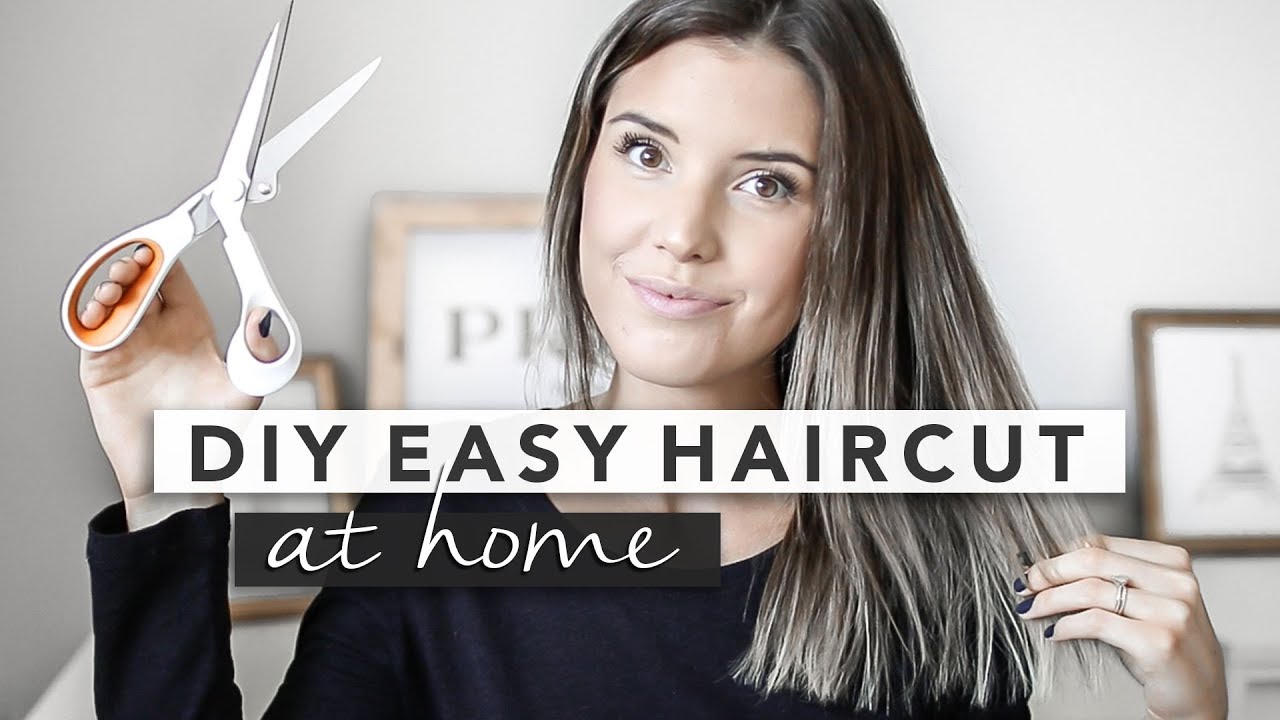
Part 2: Basic DIY Haircut Techniques
Once you have your tools assembled and your hair assessed, you can begin exploring various DIY haircut techniques. Remember, starting with small, incremental cuts is always safer than attempting drastic changes in one go.
1. Trimming Split Ends:
This is the simplest DIY haircut. Work in small sections, holding the hair taut and trimming only the very ends of the split strands. Avoid cutting too much, as this can lead to shorter hair than intended.
2. Layering:
Layering adds volume and movement to your hair. This technique requires more precision. Section your hair into layers, starting with the top layer and working your way down. Use the point-cutting technique (cutting into the hair with the tips of the scissors) to create soft layers.
3. Bang Trims:
Trimming bangs at home can be tricky. Keep the bangs damp and use a fine-tooth comb to create a straight line. Trim small amounts at a time, ensuring the cut is even. Remember, you can always trim more, but you can’t put it back!
4. One-Length Cut:
This classic cut requires precision and even sections. Part your hair down the middle and section it into small, even parts. Hold the hair taut and trim straight across, ensuring the ends are even.
5. Blunt Bob:
Achieving a perfect blunt bob at home requires skill and patience. This cut involves creating a straight line across the back of your hair, which is challenging to do yourself. If you’re attempting this, consider using a guide – a section of hair you keep as a reference point for the rest of the cut.
Part 3: Advanced DIY Haircut Techniques (with caution)
These techniques are more complex and require significant practice and a good understanding of hair cutting principles. It’s highly recommended to watch numerous tutorials before attempting these at home.
1. Texturizing:
This technique uses thinning shears to remove bulk and add texture to the hair. It’s best suited for thick hair and should be done sparingly to avoid creating unwanted gaps or thinning.
2. Undercutting:
Undercutting involves removing hair from the underside of your hair, creating a layered effect. This technique is very challenging to do yourself and can easily lead to uneven results.
3. Graduated Bob:
This style involves layering the hair, with shorter layers at the back and longer layers at the front. This requires precise sectioning and layering techniques.
Part 4: Post-Haircut Care and Troubleshooting
Even with meticulous preparation and technique, mistakes can happen. Here’s how to manage common issues:
Uneven Cuts:
If your haircut is uneven, don’t panic. You can try to even it out by trimming small sections at a time, focusing on the areas that are too long. If the unevenness is significant, consider seeking professional help.
Too Short:
If you’ve accidentally cut your hair too short, the best course of action is to wait it out. You can try styling your hair to minimize the appearance of unevenness, but ultimately, time is the best remedy.
Damaged Hair:
If you’ve damaged your hair during the cutting process, use a deep conditioning treatment to repair the damage. Avoid using heat styling tools, as this can further damage your hair.
Part 5: When to Seek Professional Help
While DIY haircuts can be a fun and cost-effective way to manage your hair, there are times when seeking professional help is necessary:
- Complex Cuts: For intricate cuts like layered bobs, asymmetrical cuts, or short pixie cuts, it’s best to leave it to the professionals.
- Significant Changes: If you’re planning a drastic change in your hairstyle, consult a stylist to ensure the new style complements your features and hair type.
- Unsatisfactory Results: If your DIY haircut attempt resulted in unevenness or damage, it’s best to seek professional help to rectify the situation.
Conclusion:
DIY haircuts can be a rewarding experience, offering a sense of control over your appearance and a chance to save money. However, it’s crucial to approach the task with caution, preparation, and realistic expectations. By following these guidelines and practicing patience, you can confidently achieve a successful DIY haircut and maintain your style between salon visits. Remember to always prioritize safety and avoid attempting techniques that are beyond your skill level. With practice, you can master these techniques and enjoy the freedom of styling your hair at home.


