Hairstyles for Women: A Comprehensive Guide to Drawing Techniques
Drawing hair, especially female hairstyles, can be a challenging yet rewarding aspect of art. The fluidity, volume, and intricate details of various hairstyles require a keen understanding of form, light, and shadow. This comprehensive guide delves into the techniques and considerations necessary to master drawing hairstyles for women, catering to artists of all skill levels.
I. Understanding the Fundamentals:
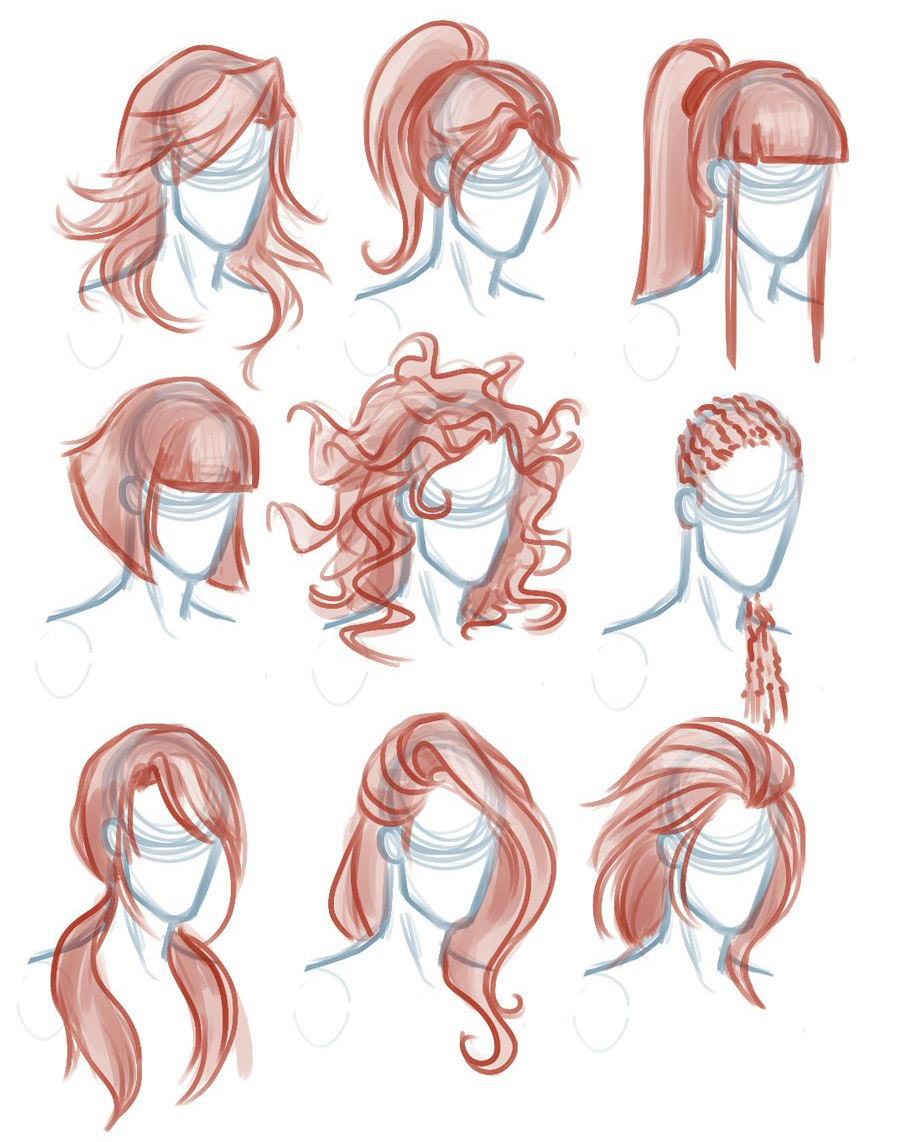
Before tackling complex hairstyles, mastering fundamental drawing principles is crucial. This includes:
-
Form and Structure: Hair, despite its apparent randomness, follows underlying forms. Think of the head as a base, and the hair as a mass that interacts with its shape. Understanding how hair flows over the skull, curves around the ears, and frames the face is paramount. Practice drawing basic shapes – spheres, cylinders, and cones – to represent these forms.
-
Light and Shadow: The interplay of light and shadow is essential for creating realistic and visually appealing hair. Observe how light interacts with different hair textures and densities, creating highlights, midtones, and shadows. Mastering value gradation – the smooth transition between light and dark – is key to achieving depth and dimension.
-
Line Weight and Texture: Varying line weight adds dynamism and realism to your drawings. Use thin lines for delicate strands and thicker lines for darker, more substantial areas. Experiment with different line qualities to convey texture – smooth lines for sleek hair, jagged lines for frizzy hair, and short, broken lines for wispy strands.
-
Perspective and Proportion: Hair doesn’t exist in isolation; it interacts with the rest of the face and body. Understanding perspective and proportion ensures that the hair fits harmoniously within the overall composition. Consider the angle of the head and how the hair falls in relation to it.

II. Exploring Different Hairstyle Categories:
Drawing various hairstyles requires adapting techniques to suit the specific characteristics of each style. Let’s explore some common categories:
A. Long Hair:
-
Straight Hair: Straight hair is relatively straightforward to draw. Focus on smooth, flowing lines that follow the general form of the head. Use subtle variations in line weight to suggest volume and depth. Pay attention to how light reflects off the surface of the hair, creating subtle highlights.
-
Wavy Hair: Wavy hair requires more attention to curves and flow. Use gentle S-curves to represent the waves, ensuring they maintain a natural rhythm. Consider the direction and weight of each wave, as this influences how it falls and interacts with other strands.
-
Curly Hair: Curly hair presents a greater challenge due to its complex texture and volume. Instead of individual strands, focus on drawing the overall shape and volume of the curls. Use short, broken lines or hatching to suggest texture. Pay close attention to how light and shadow define the individual curls.
-
Braids and Plaits: Braids and plaits require meticulous attention to detail. Start by sketching the overall form of the braid, then gradually add individual strands and sections. Maintain consistent spacing and thickness between the strands to achieve a realistic look.
B. Short Hair:
-
Pixie Cuts: Pixie cuts are characterized by their short, choppy layers. Focus on capturing the texture and movement of the hair. Use short, sharp lines to depict the individual strands and layers. Pay attention to how the hair frames the face and accentuates facial features.
-
Bobs: Bobs are versatile hairstyles that can be styled in various ways. Consider the length, layers, and texture of the bob when drawing. Pay attention to how the hair falls around the jawline and neck.
-
Undercuts: Undercuts involve shaving or trimming the hair on the underside of the head, leaving longer hair on top. Focus on accurately depicting the contrast between the shaved and longer sections. Use shading to create depth and dimension.
C. Updos:
-
Buns: Buns are versatile updos that can range from sleek and polished to messy and textured. Focus on the overall shape and volume of the bun. Use shading to create depth and dimension.
-
Ponytails: Ponytails are simple yet elegant hairstyles. Focus on the smoothness of the hair and the way it gathers at the base of the ponytail.
-
French Twists: French twists involve twisting the hair into a neat, elegant updo. Start by sketching the overall shape of the twist, then gradually add details such as individual strands and highlights.
III. Advanced Techniques:
Once you have a solid understanding of the fundamentals and different hairstyle categories, you can explore more advanced techniques:
-
Rendering Hair Texture: Experiment with different hatching, cross-hatching, and stippling techniques to create a variety of hair textures, from smooth and silky to coarse and wiry.
-
Using Reference Images: Use reference images to study the details of different hairstyles and lighting conditions. This will help you understand how hair behaves and how to accurately depict its form and texture.
-
Blending Techniques: Blending techniques, such as smudging or using a tortillon, can create smooth transitions between light and shadow, enhancing the realism of your drawings.
-
Adding Accessories: Incorporate hair accessories such as headbands, barrettes, and ribbons to add personality and detail to your drawings.
IV. Practice and Experimentation:
The key to mastering drawing hairstyles for women is consistent practice and experimentation. Start with simple hairstyles and gradually progress to more complex ones. Don’t be afraid to make mistakes; they are valuable learning opportunities. Experiment with different techniques and mediums to find what works best for you.
V. Conclusion:
Drawing hairstyles for women is a challenging but rewarding art form. By mastering the fundamentals, understanding different hairstyle categories, and exploring advanced techniques, you can create stunning and realistic depictions of female hair. Remember that consistent practice and experimentation are key to developing your skills and finding your unique artistic voice. Embrace the process, and enjoy the journey of mastering this intricate and beautiful aspect of art. Through careful observation, dedicated practice, and a willingness to experiment, you can transform your drawings from simple sketches to breathtakingly realistic portraits that capture the essence of each unique hairstyle. The possibilities are endless, limited only by your imagination and dedication.


